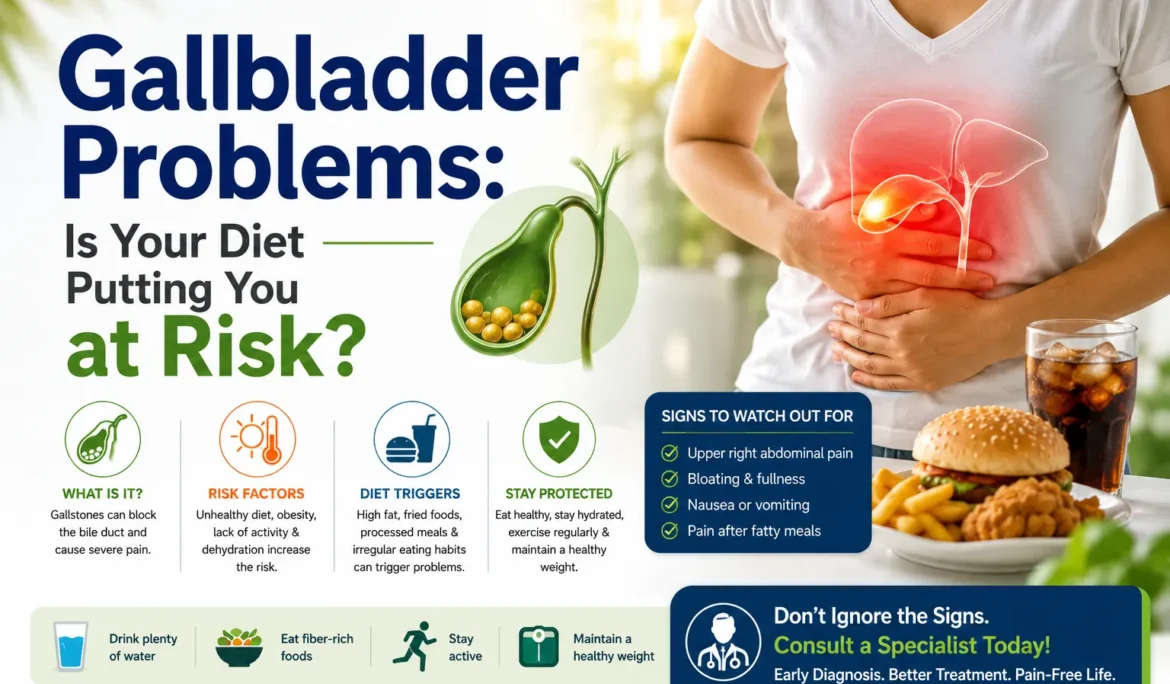
Gallbladder problems are among the most common digestive disorders affecting adults today. While many people may not pay attention to their gallbladder health until symptoms appear, certain dietary habits and lifestyle choices can significantly increase the risk of developing gallstones and other gallbladder conditions.
If you’ve been experiencing abdominal discomfort, nausea, or pain after meals, your diet may be putting your gallbladder at risk. Understanding the connection between eating habits and gallbladder health can help you take preventive measures and seek timely treatment when necessary.
What Is the Gallbladder and Why Is It Important?
The gallbladder is a small pear-shaped organ located beneath the liver. Its primary function is to store and release bile, a digestive fluid produced by the liver that helps break down fats in the food you eat.
When the gallbladder functions normally, bile is released into the digestive tract whenever fatty foods are consumed. However, when bile becomes imbalanced, gallstones can form, leading to pain, inflammation, and other complications.
How Diet and Lifestyle Affect Gallbladder Health
Several lifestyle and dietary habits can increase the risk of gallbladder problems.
1. Dehydration and Concentrated Bile
When the body lacks adequate fluids, bile can become more concentrated, increasing the likelihood of gallstone formation. People who do not drink enough water daily may unknowingly increase their risk of gallbladder problems.
2. Increased Consumption of Fatty Foods
Regular consumption of fried snacks, fast food, processed foods, and rich restaurant meals can place additional stress on the gallbladder. Fatty foods force the gallbladder to work harder to release bile. In people with existing gallstones or gallbladder disease, this can trigger painful attacks.
3. Irregular Eating Patterns
Skipping meals or fasting for long periods can contribute to gallstone formation. When the gallbladder remains inactive for extended periods, bile can become stagnant, increasing the risk of stone development.
4. Rapid Weight Loss Diets
Many individuals attempt to lose weight through crash diets or extreme calorie restrictions. While weight loss can improve overall health, rapid weight loss increases the amount of cholesterol released into bile, making gallstone formation more likely.
Common Gallbladder Problems
· Gallstones
Gallstones are hardened deposits that develop inside the gallbladder. They can range in size from tiny grains to larger stones capable of blocking bile ducts.
· Cholecystitis
This refers to inflammation of the gallbladder, often caused by gallstones blocking the flow of bile.
· Bile Duct Obstruction
Gallstones can move into the bile ducts, causing blockage, severe pain, and potential complications.
· Gallbladder Infection
Untreated inflammation may lead to infection, requiring urgent medical attention.
Symptoms of Gallbladder Problems
Recognizing symptoms early can prevent serious complications. Common signs include:
- Pain in the upper right abdomen
- Pain after eating fatty foods
- Nausea and vomiting
- Indigestion or bloating
- Abdominal discomfort after meals
- Pain radiating to the back or right shoulder
- Excessive gas and fullness
In some cases, symptoms may appear suddenly and become severe.
Warning Signs That Require Immediate Medical Attention
Seek medical help immediately if you experience:
- Severe abdominal pain lasting several hours
- High fever with abdominal pain
- Yellowing of the skin or eyes (jaundice)
- Persistent vomiting
- Chills and sweating
- Dark urine or pale stools
These symptoms may indicate a blocked bile duct or serious gallbladder infection.
How Your Diet May Be Increasing the Risk
Certain foods can aggravate gallbladder conditions.
Foods That May Trigger Gallbladder Symptoms
- Fried snacks
- Fast food and burgers
- Deep-fried foods
- Processed meats
- Cream-based desserts
- Excessive cheese and butter
- Sugary beverages
These foods can increase cholesterol levels in bile and trigger gallbladder attacks.
Healthier Food Choices
Consider including:
- Fresh fruits
- Green leafy vegetables
- Whole grains
- Lean proteins
- Plenty of water
- Fresh salads
- High-fiber foods
These foods support healthy digestion and reduce stress on the gallbladder.
Tips to Protect Your Gallbladder
· Stay Hydrated
Drink adequate water throughout the day to support digestion and healthy bile flow.
· Follow a Balanced Diet
Choose foods low in saturated fats and high in fiber.
· Eat Regular Meals
Avoid skipping meals and maintain a consistent eating schedule.
· Exercise Regularly
Moderate physical activity supports healthy digestion and weight management.
· Avoid Rapid Weight Loss
Aim for gradual and sustainable weight reduction if needed.
· Limit Processed Foods
Reducing junk food intake can help prevent gallbladder stress and digestive discomfort.
When Is Gallbladder Surgery Necessary?
Not all gallstones require treatment. However, if gallstones cause symptoms or complications, medical intervention may be necessary. Your doctor may recommend Gallbladder Surgery if you experience:
- Recurrent gallbladder attacks
- Persistent abdominal pain
- Gallbladder inflammation
- Bile duct obstruction
- Pancreatitis caused by gallstones
- Repeated digestive symptoms affecting daily life
Timely Gallbladder Surgery can prevent serious complications and provide long-term relief.
What Is Gallbladder Surgery?
Gallbladder Surgery, medically known as cholecystectomy, is the procedure used to remove the gallbladder. Today, most patients undergo Laparoscopic Gallbladder Surgery, a minimally invasive technique performed through small incisions.
Benefits of Laparoscopic Gallbladder Surgery
- Smaller incisions
- Less postoperative pain
- Minimal scarring
- Faster recovery
- Shorter hospital stay
- Quicker return to normal activities
The procedure is considered safe and highly effective for treating symptomatic gallstones and gallbladder disease.
Can Gallbladder Problems Be Prevented?
While some risk factors such as age and genetics cannot be controlled, adopting healthy lifestyle habits can reduce your risk. Preventive measures include:
- Maintaining a healthy weight
- Staying hydrated
- Eating a balanced diet
- Exercising regularly
- Avoiding crash diets
- Managing cholesterol levels
These habits support both gallbladder health and overall well-being.
Gallbladder problems can develop gradually and often go unnoticed until symptoms become severe. Unhealthy eating habits, dehydration, obesity, and irregular meal schedules can all contribute to gallstone formation and gallbladder disease.
If you frequently experience abdominal pain, indigestion, nausea, or discomfort after meals, don’t ignore the symptoms. Early diagnosis and treatment can prevent complications and help you maintain a healthy digestive system. Schedule a consultation with Dr. Gourav Das, a trusted expert in Gastrointestinal and Laparoscopic Surgery, for personalized care and advanced Gallbladder Surgery solutions.