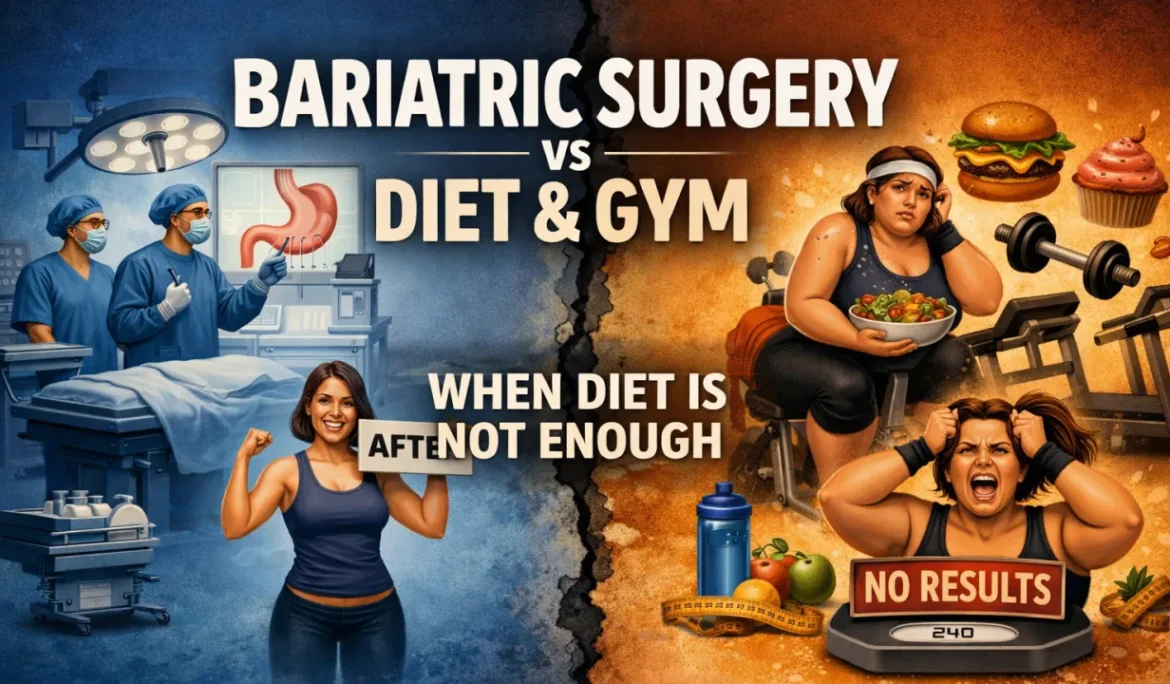
Obesity has become one of the most common health challenges in modern society. Many people begin their weight loss journey with diet control and gym workouts, hoping to achieve sustainable results. While these methods work effectively for some individuals, others struggle to lose weight despite sincere efforts. If you have been dieting strictly, exercising regularly, and still not seeing meaningful results, you may start wondering whether something else is needed.
This is where bariatric surgery enters the discussion. Bariatric surgery is not a shortcut for weight loss it is a medical treatment for obesity, especially when traditional methods fail or when obesity starts affecting overall health.
In this article, we will explore:
- How diet and gym help in weight loss
- Why some people fail to lose weight with lifestyle changes
- When bariatric surgery becomes a medical necessity
- Bariatric surgery benefits and safety
- How to decide the right option for you
Understanding Weight Loss: The Role of Diet and Exercise
The fundamental principle of weight loss is simple: burn more calories than you consume.
- Diet Control
Diet plays a crucial role in weight management. Balanced nutrition helps regulate metabolism and reduce excess fat storage.
Healthy weight loss diets typically include:
- Lean protein sources (fish, chicken, eggs, lentils)
- Fiber-rich foods (vegetables, fruits, whole grains)
- Healthy fats (nuts, seeds, olive oil)
- Reduced intake of sugar and processed foods
Proper diet planning helps maintain energy levels while reducing calorie intake.
- Physical Activity and Gym Workouts
Exercise improves calorie burning and strengthens the body.
Common weight loss workouts include:
- Cardio exercises like running, cycling, swimming
- Strength training to build muscle mass
- HIIT workouts for fat burning
- Yoga and mobility exercises
Exercise also improves:
- Heart health
- Mental wellbeing
- Metabolic function
- Muscle strength
For many individuals with mild to moderate weight gain, a combination of diet and exercise is enough to achieve healthy weight loss. However, obesity is not always that simple.
Why Diet and Gym Sometimes Fail
Many people blame themselves when weight loss does not happen despite effort. In reality, several biological and medical factors influence body weight.
- Metabolic Adaptation
When a person loses weight, the body often slows down metabolism to conserve energy. This makes further weight loss increasingly difficult.
The body essentially tries to return to its previous weight.
- Hormonal Imbalance
Hormones control hunger, metabolism, and fat storage.
Obesity is often linked to changes in hormones such as:
- Ghrelin (hunger hormone)
- Leptin (satiety hormone)
- Insulin
When these hormones become imbalanced, the body may constantly feel hungry even after eating.
- Genetic Factors
Some individuals have genetic predispositions to obesity, meaning their bodies store fat more easily. Even with diet and exercise, weight loss may be minimal.
- Medical Conditions
Certain medical conditions make weight loss extremely difficult.
Examples include:
- Hypothyroidism
- Polycystic Ovary Syndrome (PCOS)
- Insulin resistance
- Type 2 diabetes
These conditions affect metabolism and fat storage.
- Long-Term Severe Obesity
For individuals with BMI above 35 or 40, lifestyle changes alone may not be sufficient to achieve meaningful weight loss. In such cases, losing large amounts of weight becomes medically challenging.
When Obesity Becomes a Medical Problem
Obesity is not just about appearance. It is a serious medical condition associated with many life-threatening diseases. Common obesity-related health problems include:
- Type 2 diabetes
- High blood pressure
- Heart disease
- Sleep apnea
- Joint pain and arthritis
- Fatty liver disease
- Infertility
- Depression and anxiety
When obesity starts affecting health, medical treatment may be required.
This is where bariatric surgery can play an important role.
What Is Bariatric Surgery?
Bariatric surgery refers to specialized surgical procedures designed to help people lose weight by modifying the digestive system. The surgery works by:
- Reducing stomach size
- Limiting food intake
- Altering hormone signals that control hunger and fullness
These changes help patients feel full faster and reduce overall calorie intake. Over time, this leads to significant and sustained weight loss.
Types of Bariatric Surgery
Several types of bariatric procedures are performed depending on patient condition.
- Sleeve Gastrectomy
This is one of the most common bariatric surgeries today.
In this procedure:
- Around 75–80% of the stomach is removed
- The remaining stomach becomes a thin sleeve-like structure
Benefits include:
- Reduced hunger hormone production
- Smaller stomach capacity
- Gradual but effective weight loss
- Gastric Bypass Surgery
In this procedure:
- A small stomach pouch is created
- Food bypasses part of the small intestine
This reduces both food intake and calorie absorption. It is particularly effective for patients with diabetes and severe obesity.
- Mini Gastric Bypass
This is a simplified version of gastric bypass with:
- Shorter surgical time
- Effective metabolic benefits
Your surgeon determines the most appropriate procedure after detailed evaluation.
When Bariatric Surgery Is Recommended
Bariatric surgery is usually recommended in the following cases:
- BMI Above 40
Individuals with severe obesity (BMI ≥ 40) may qualify for surgery even without other diseases.
- BMI Above 35 with Health Problems
If BMI is 35 or higher and associated with conditions such as:
- Diabetes
- High blood pressure
- Sleep apnea
Bariatric surgery may be advised.
- Failure of Lifestyle Treatments
If a person has:
- Tried multiple diets
- Followed exercise programs
- Used medications
and still fails to achieve sustainable weight loss, surgery may be considered.
- Obesity Affecting Quality of Life
Severe obesity can affect:
- Mobility
- Confidence
- Work productivity
- Social life
Bariatric treatment may significantly improve these aspects.
Bariatric Surgery vs Diet & Gym: Key Differences
| Factor | Diet & Gym | Bariatric Surgery |
| Weight Loss Speed | Slow | Faster and significant |
| Long-Term Results | Often difficult to maintain | More sustainable |
| Hunger Control | Limited | Hormonal changes reduce hunger |
| Best For | Mild to moderate obesity | Severe obesity |
| Medical Benefits | Limited | Improves diabetes, BP, sleep apnea |
This comparison does not mean diet and exercise are useless. In fact, they remain essential even after bariatric surgery.
Health Benefits of Bariatric Surgery
Bariatric surgery provides benefits beyond weight loss. Research shows major improvements in:
- Diabetes Control: Many patients experience complete remission of Type 2 diabetes after surgery.
- Blood Pressure Reduction: Weight loss reduces pressure on the cardiovascular system.
- Better Heart Health: Risk of heart attack and stroke significantly decreases.
- Relief from Joint Pain: Less body weight reduces stress on knees, hips, and spine.
- Improved Fertility: Hormonal balance often improves after weight reduction.
- Better Sleep: Sleep apnea symptoms frequently improve or disappear.
Is Bariatric Surgery Safe?
Modern bariatric surgery is considered safe and minimally invasive when performed by experienced surgeons. Most procedures today are performed using laparoscopic techniques, which involve:
- Small incisions
- Less pain
- Faster recovery
- Short hospital stay
Patients usually return to daily activities within 1–2 weeks depending on recovery. However, like any surgery, it requires proper medical evaluation and follow-up.
Life After Bariatric Surgery
Bariatric surgery is not a magic solution. Long-term success requires commitment to healthy habits. Patients must follow:
Nutritional Guidelines: Small, balanced meals are recommended.
Regular Exercise: Physical activity remains essential for maintaining weight loss.
Medical Follow-ups: Regular monitoring helps prevent nutritional deficiencies.
Lifestyle Changes: Healthy habits ensure sustained results.
When patients follow these guidelines, weight loss can be long-lasting and life-changing.
When Should You Consult a Bariatric Surgeon?
You should consider consulting a bariatric specialist if:
- Your BMI is above 35
- You struggle with obesity-related diseases
- Diet and exercise have repeatedly failed
- Your weight affects daily life and confidence
Diet and exercise are always the first step in weight management, and they play a vital role in maintaining overall health. However, for individuals with severe obesity, lifestyle changes alone may not be enough. Bariatric surgery offers a scientifically proven and medically supervised solution that can lead to:
- Significant weight loss
- Improvement in obesity-related diseases
- Better quality of life
If you have been struggling with weight for years despite sincere efforts, Dr. Gourav Das – the expert surgeon can help you explore the right options.