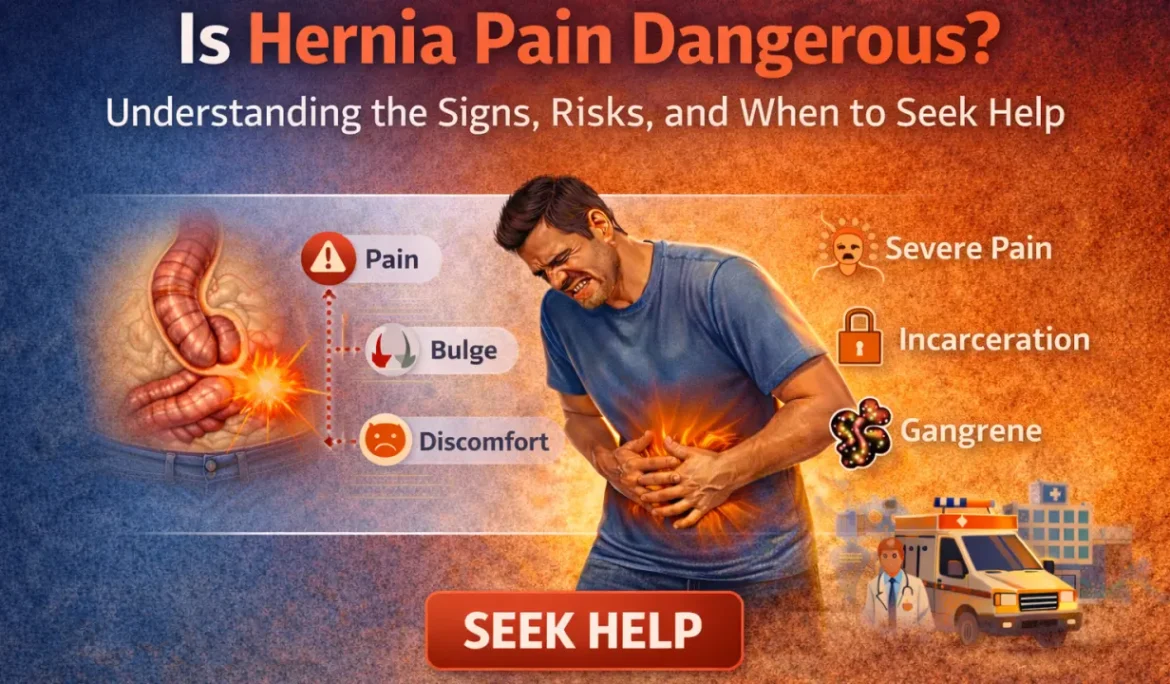
Hernia is a common medical condition that affects millions of people worldwide, yet it is often misunderstood or ignored especially in its early stages. Many individuals experience mild discomfort or pain due to a hernia and assume it is not serious. However, a common question arises: Is hernia pain dangerous?
The answer is not always straightforward. While some hernias may remain harmless for years, others can lead to severe complications if left untreated. Understanding the nature of hernia pain, its warning signs, and potential risks is crucial for timely medical intervention.
In this blog, we will explore everything you need to know about hernia pain its causes, types, symptoms, risks, and when it becomes dangerous.
What is a Hernia?
A hernia occurs when an internal organ or tissue pushes through a weak spot in the surrounding muscle or connective tissue. This often appears as a bulge under the skin and may or may not cause pain. Hernias most commonly occur in the abdominal region but can also develop in other areas such as the groin or upper thigh.
Common Types of Hernia
- Inguinal Hernia
- Most common type
- Occurs in the groin area
- More frequent in men
- Umbilical Hernia
- Occurs near the belly button
- Common in infants and overweight adults
- Hiatus Hernia
- Occurs when part of the stomach moves into the chest cavity
- Often associated with acid reflux
- Incisional Hernia
- Develops at the site of a previous surgery
- Caused by weakened surgical scars
- Femoral Hernia
- Occurs in the upper thigh
- More common in women
What Does Hernia Pain Feel Like?
Hernia pain varies depending on the type and severity. Some people feel no pain at all, while others may experience:
- A dull ache or burning sensation
- Dragging sensation in the groin
- Pressure or heaviness in the abdomen
- Sharp pain during lifting or bending
- Discomfort after prolonged standing
- Pain that worsens with coughing or sneezing
In many cases, the pain is mild and manageable, which is why people often ignore it. However, ignoring persistent pain can be risky.
Is Hernia Pain Always Dangerous?
Not necessarily. Mild hernia pain is not always dangerous, especially in early stages. Many hernias are reducible, meaning the bulge can be pushed back into place and does not immediately pose a serious threat.
However, this does not mean it should be ignored. A hernia does not heal on its own. Over time, it can grow larger and increase the risk of complications.
When Does Hernia Pain Become Dangerous?
Hernia pain becomes dangerous when complications arise. The most serious conditions include:
- Incarcerated Hernia
This occurs when the herniated tissue becomes trapped and cannot be pushed back.
Symptoms include:
- Persistent pain
- Swelling that does not reduce
- Nausea or vomiting
- Strangulated Hernia (Medical Emergency)
This is the most dangerous form of hernia.
It happens when the blood supply to the trapped tissue is cut off.
Warning signs:
- Severe, sudden pain
- Red, purple, or dark bulge
- Fever
- Rapid heart rate
- Vomiting
- Inability to pass gas or stool
This condition requires immediate surgery. Delay can lead to tissue death and life-threatening complications.
Why You Should Not Ignore Hernia Pain
Even if the pain is mild, ignoring it can lead to:
- Enlargement of the hernia
- Increased discomfort over time
- Risk of emergency complications
- Reduced quality of life
Early diagnosis and treatment can prevent serious outcomes and make treatment simpler.
Who is Most at Risk?
Certain individuals are more prone to developing hernias:
- Men (especially for inguinal hernia)
- Older adults
- People with physically demanding jobs
- Athletes
- Overweight individuals
- People with chronic respiratory conditions
Can a Hernia Heal Without Surgery?
No. A hernia does not heal on its own. Support belts or lifestyle changes may temporarily reduce discomfort, but they do not fix the underlying problem.
Lifestyle Tips to Manage Hernia Pain
While waiting for treatment, you can manage symptoms by:
- Avoiding heavy lifting
- Maintaining a healthy weight
- Eating high-fiber foods to prevent constipation
- Quitting smoking
- Practicing proper posture
- Using abdominal support if recommended
When Should You See a Doctor?
Seek medical attention if you experience:
- Persistent or worsening pain
- A visible bulge that increases in size
- Pain during daily activities
- Sudden severe pain
- Nausea or vomiting
- Changes in the color of the bulge
So, is hernia pain dangerous?
The answer depends on the severity and progression of the condition.
- Mild pain may not be immediately dangerous
- But untreated hernias can lead to serious complications
- Sudden or severe pain is a warning sign that should never be ignored
The key is early diagnosis and timely treatment.
If you or someone you know is experiencing hernia symptoms, consult a healthcare professional without delay. Remember, taking action early can prevent emergencies and ensure a healthier, pain-free life.
Don’t ignore that discomfort.
If you notice a bulge or feel persistent abdominal pain, consult a specialist Dr. Gourav Das today! Early treatment can save you from complications..